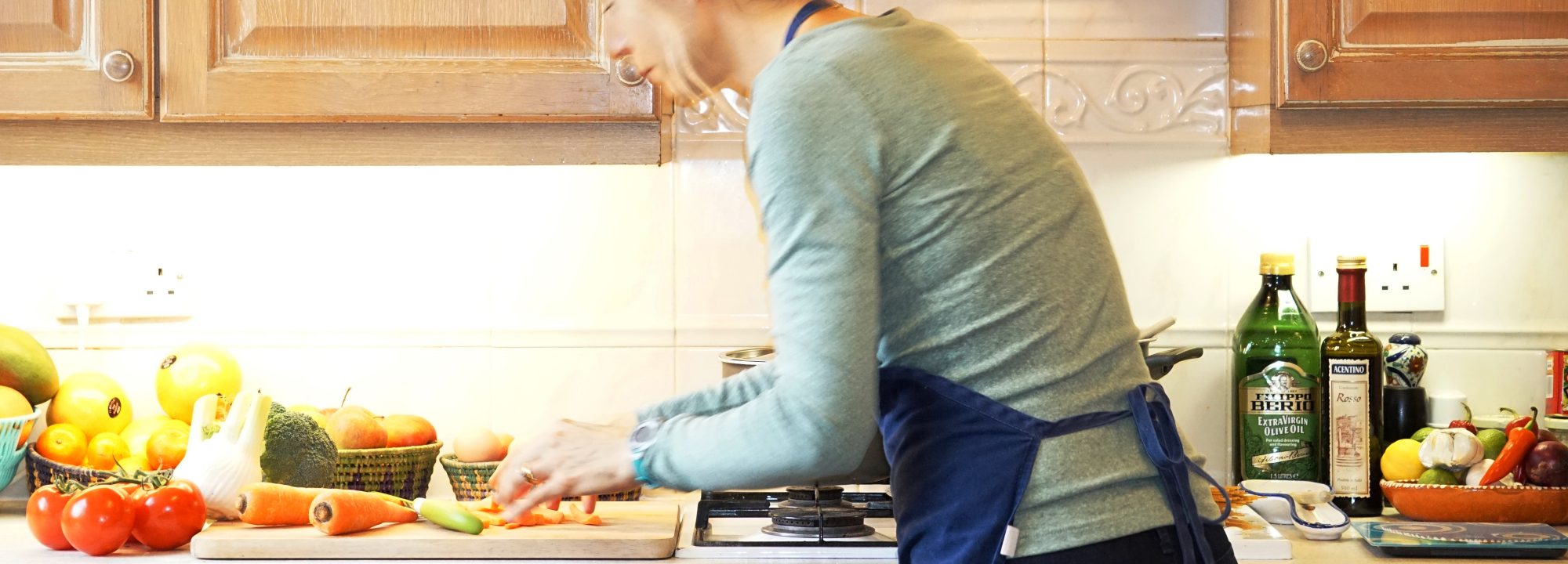
I am sure that I am not alone in finding that whenever I return from an unforgettable holiday, I like to try and hold onto it just a little bit longer. Sometimes this means I’ll be wearing the same touristy tee and drinking from a new ‘I heart (insert country here)’ mug for days on end. But more often I like to try to recreate some of the dishes and flavours that I enjoyed eating while away. Almost unconsciously my usual shopping list changes and I find myself filling my supermarket trolley with familiar holiday ingredients. Which explains why since recently returning from Iceland – the country, not the supermarket – I can’t seem to stop reaching for some skyr.
After what seemed like a very long and drawn out 2024, many have begun the new year with a renewed commitment to do things differently. Whether you’ve joined a gym, embarked on a new fitness regime or signed up for an event, so far you are probably still feeling pretty motivated. After all, it is early days and even if there’s a hint on the horizon that things may get harder, there’s still a lot you can do to stay the course. One thing that is sure to help keep you going is paying attention to the often neglected area of hydration. You probably already knew that hydration is important to keep in mind when the temperatures climb but it is also something you need to consider in the winter. Essentially, hydration plays a key role in recovery and can affect whether you are fully fit again for the next training block. Which is why it pays to have a not-too-dry January.
Sport is somewhat like politics these days in that competitions that capture all of our attention and are the only topic of conversation are suddenly just…not. Perhaps we have a short attention span, because it wasn’t so long ago when the UK was inundated by coverage of the Men’s Euro 2024. But by the time the leagues of England supporters sobered up to face that football was not ‘coming home’, the public had already moved on. And what better place to focus our attention on than the Paris Olympics. After all, the Olympics never disappoint in showcasing a mix of incredible talent, record-breaking feats, and a touch of high drama and controversy that guarantees to entertain the masses…for at least the next two weeks. All eyes are now focused on Team GB, as they battle it out against the rest of the world’s greatest athletes and try to make it to an exclusive podium. Brutally, all of the attention is on the medal winners, and the athletes who don’t quite make it there are almost overlooked.
It may be harsh but in the Olympics (and the Euros) you’re either winning or losing, and no one is as interested in hearing about a fourth place’s journey. The winners not only inspire the rest of us to get fit, take up sport and achieve, they also make it very easy to believe that winning is everything. But maybe it’s a human instinct to zone in entirely on the prize, especially when you see others try to do something almost superhuman. However, as mere mortals, life and reality often get in the way of any overly ambitious goals to make a podium. And by only ever focusing on getting a result, you are guaranteed to be sometimes disappointed. It makes much more sense to put winning into perspective by shifting the focus onto how to get there.
Have you ever bitten off more than you can chew but knew there was no going back? If you are a runner then you may be more than familiar with this feeling of dread mixed with inevitability that can hit you even when you are doing something you actually enjoy. You might feel this way when a little bad weather is dialled up to biblical while you are still mid-run. Or maybe you face this whenever you step up to a new starting line for the first time. Even runners who appear fearless will experience this same feeling when they attempt to do something that is just a little outside their comfort zone. Fortunately, one of the universal truths of running also happens to be the well-known saying, that ‘what doesn’t kill you makes you stronger’. In other words, having the resilience to overcome whatever challenge is in front of you can be immensely rewarding.
With the cost of living crisis affecting virtually every household in the UK, Mental Health Awareness Week couldn’t come at a better time. Although not everyone recognises the importance of being mentally healthy. Especially those that already consider themselves to be in top form. Because we all know how important it is to keep ourselves physically healthy but how many of us give the same attention to our mental health? Which is really odd because most people will experience mental health issues at some point in their lives or at the very least know someone else who has. And although there is now far greater acceptance and awareness of mental health issues it doesn’t mean that we are any better at knowing how to safeguard our mental wellbeing. Fortunately, there are 3 key steps that you can take that will help build your resilience and will ensure your mental health continues to stay in top shape.